
Compound interest gets called "the eighth wonder of the world" often enough that the phrase has become a cliché, but the underlying idea is genuinely worth understanding properly — because most people who've heard the term still couldn't explain why it matters so much over long periods of time.
The simple version
Interest is the extra money you earn (or pay) on top of an original amount. Simple interest only calculates that extra amount on the original sum, every time. Compound interest is different: once interest is added, the next round of interest is calculated on the new, larger total — including the interest that was just added. In other words, your interest starts earning its own interest.
Say you put $1,000 into an account earning 10% a year. After year one, simple interest gives you $100, and you'd get another flat $100 the year after, and the year after that. Compound interest instead gives you $100 in year one, but in year two it calculates 10% of $1,100 (not $1,000), giving you $110. In year three, it's 10% of $1,210, giving $121. The gap seems small at first — but it doesn't stay small.
Why the gap explodes over time
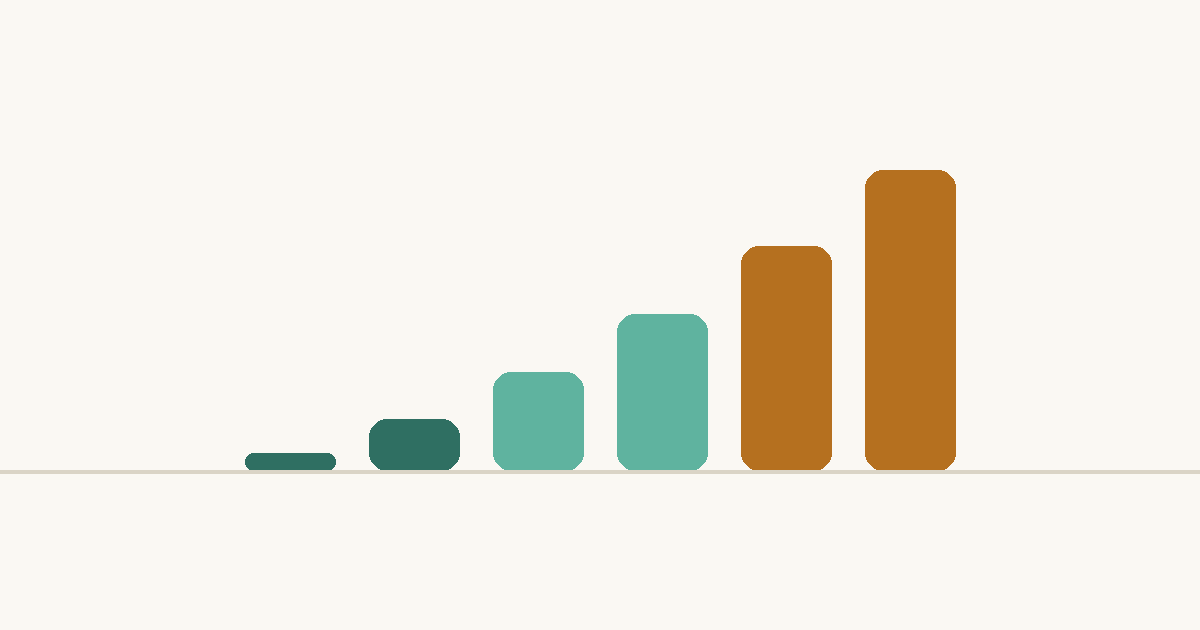
The difference between simple and compound interest barely shows up in year one or two. It becomes dramatic over long stretches of time, because each year's growth is calculated on an ever-larger base. This is why financial advisors talk so much about starting early: money invested in your twenties has decades for this snowball effect to build, while the same amount invested in your forties has far less runway.
This is also why compound interest works against you with debt. A credit card balance that compounds interest monthly grows the same way a savings account does — except now it's working against your finances instead of for them, which is part of why high-interest debt can spiral so much faster than it first appears it will.
What actually changes the outcome
Three things determine how much compounding matters in practice: the interest rate, the length of time, and how often the interest compounds (annually, monthly, or daily). Of these three, time tends to matter the most. A modest rate compounded over thirty years will typically outperform a much higher rate compounded over five, simply because compounding needs repetition to build momentum.
Compounding frequency matters too, though less dramatically than people often assume. Daily compounding does produce a slightly higher return than annual compounding at the same stated rate, but the difference over a single year is usually small. It's over many years that the frequency starts to add up to a meaningfully larger number.
Seeing it with real numbers
The easiest way to actually understand this is to plug in your own numbers and watch how the total changes as you adjust the rate, the term, and the compounding frequency. Reading about compounding in the abstract only goes so far — seeing the curve bend upward with your own figures makes the concept click in a way explanation alone usually doesn't.